
Business break-ins can cause serious disruption for commercial premises, including theft, property damage, delayed operations and financial loss. This guide explains practical ways your business can improve premises security, strengthen out-of-hours protection and reduce the risk of commercial burglary.
Most business break-ins do not start with the door being forced open.
It usually starts much earlier – with a weak access point, poor lighting, no visible security presence, an alarm nobody responds to quickly, or a site that looks quiet and unprotected after hours.
A break-in is more than a security incident. It can mean stolen stock, damaged property, delayed operations, insurance claims, staff disruption and lost confidence. In some cases, the item stolen is not the biggest cost. The real cost is the interruption that follows.
That is why preventing break-ins is not just about locks, alarms or cameras. It is about reducing opportunity, increasing deterrence and making sure there is a clear response when risk appears.
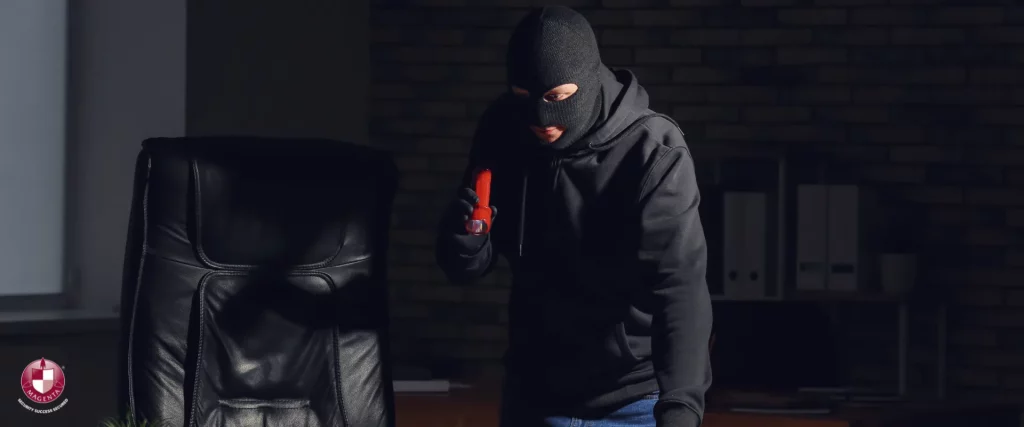
Most commercial premises are targeted because they look vulnerable. This may include:
Criminals often look for the easiest opportunity. If your premises appear unmanned, unmonitored or slow to respond, the risk increases.
Effective commercial burglary prevention often starts with identifying vulnerabilities before intruders do.
Start with the obvious question: how would someone get in?
Check all entrances, loading bays, gates, fire exits, shutters, roof access points and perimeter fencing. Many break-ins happen because one part of the building or site is weaker than the rest. Look for:
A simple access review can reveal weaknesses before someone else finds them.

Offenders prefer places where they can act unseen.
Lighting, signage, visible patrols and active security presence all help reduce the appeal of a target. A site that looks watched is harder to approach casually.
For businesses with yards, depots, construction areas, warehouses or vacant units, mobile patrols can be especially useful. They create unpredictability and show that the site is not simply being left alone until morning.
CCTV is valuable, but it is not always enough.
A camera may record a break-in, but it does not physically challenge an intruder, check a suspicious vehicle or secure a vulnerable access point. Without monitoring, escalation and response, CCTV can become evidence after the event rather than prevention before it.
For stronger protection, CCTV should be supported by:
The key question is not only “do we have cameras?” It is “what happens when the cameras or alarms identify a threat?”

Out-of-hours site security is often one of the most overlooked areas of business premises protection. any organisations are most vulnerable when the business is closed.
Evenings, weekends and quiet periods are when break-ins, trespass and vandalism often happen. If nobody is checking the site, a small incident can go unnoticed until it has become a bigger problem.
Ask:
If the answer is unclear, your business may be more exposed than it appears.
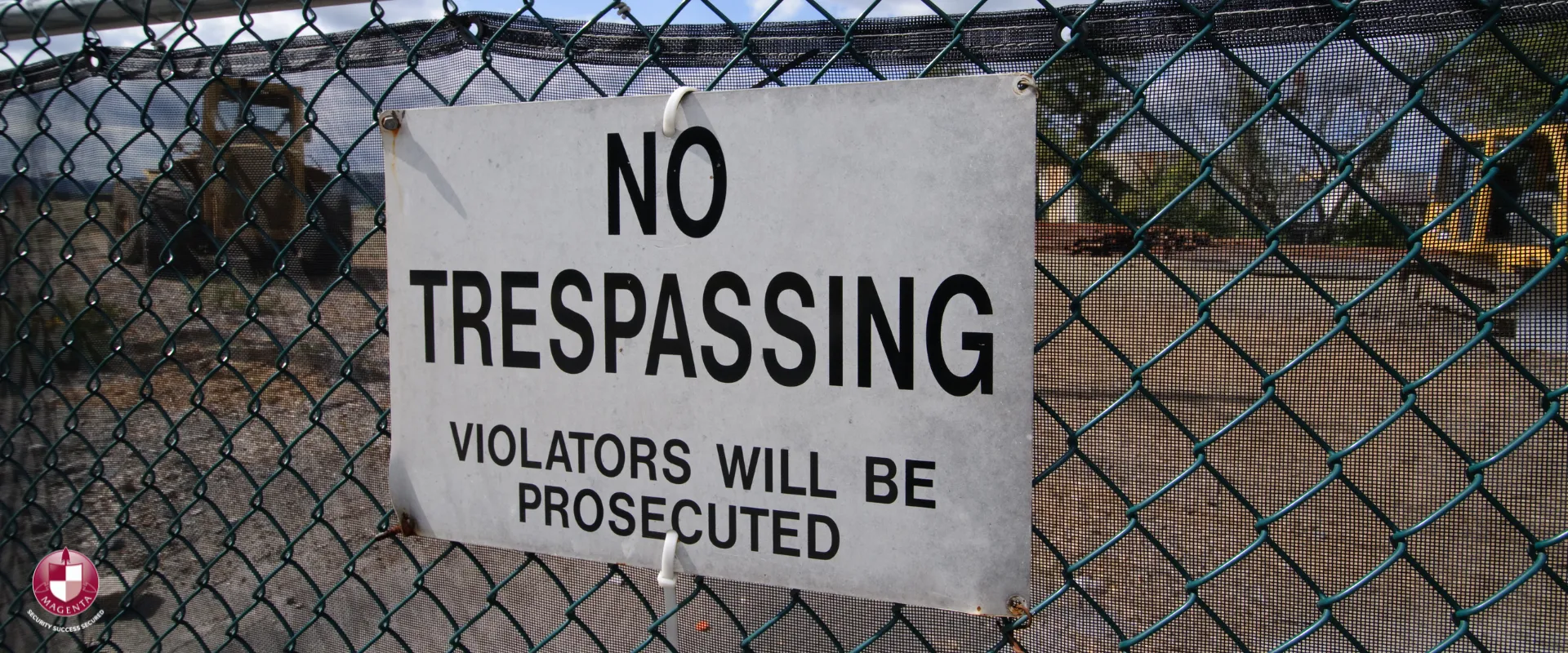
Trespass is often dismissed as a nuisance, but it can be an early indicator of more serious risk.
People entering a site without permission may be testing access, identifying stock, checking routines or looking for weaknesses. This is particularly relevant for construction sites, industrial estates, storage yards, commercial units and vacant premises.
Repeated trespass should trigger a security review. It may indicate that the site needs stronger perimeter control, mobile patrols, K9 support or clearer response procedures.
Security risk is not static.
A nearby break-in, suspicious activity in the area, repeated incidents on local industrial estates or a pattern of theft can all change your risk level quickly.
Magenta Security uses live threat intelligence to help inform customers and initiate faster security responses when risks increase. This means security can adapt to what is happening now, rather than relying only on a fixed routine.
This can be particularly valuable because it provides extra awareness without requiring an in-house security team.
Security works best when it fits how the business operates.
A professional security provider should understand your opening hours, delivery patterns, access requirements, vulnerable areas and escalation process. Security should not create friction for your team. It should reduce pressure.
Magenta Security provides licensed and fully trained personnel who integrate with customer operations teams. This helps ensure that security activity supports day-to-day continuity, rather than sitting separately from it.
That might include:
This is where security becomes more than a cost. It becomes part of protecting the business.
Start with a simple risk review. Ask yourself:
Businesses that regularly review vulnerabilities are often better positioned to prevent theft.
The goal is not to overcomplicate security. The goal is to identify the most practical steps that reduce the greatest risks.
Magenta Security helps a wide range of organisations reduce the risk of theft, trespass, vandalism and operational disruption through dependable commercial security services delivered by licensed, fully trained personnel.
Services that can support break-in prevention include:
The point is not simply to provide “security cover”. It is to help prevent incidents, reduce disruption and deliver a clearer return on investment through practical, integrated security provision.
Most businesses improve security after something goes wrong.
The smarter approach is to act before a break-in forces the decision.
If your site has weak access points, poor out-of-hours cover, repeated trespass, exposed stock or unclear alarm response, those gaps will not fix themselves.
Find the weakness before someone else does.
Want to know how vulnerable your business premises may be to break-ins or theft? Contact Magenta Security to help your organisation identify potential security gaps, reduce operational risk and strengthen protection across your site.
Is your current security provision actively reducing risk or simply covering shifts?
Request a Magenta Security risk-responsive review to identify where your site or estate may be exposed.
Simply call our award winning customer service team on 0800 772 3786.